5G Networks Deliver Measurable Latency Cuts for Live Event Betting Platforms
Parker Sullivan · Nov 12, 2026
5G Networks Deliver Measurable Latency Cuts for Live Event Betting Platforms
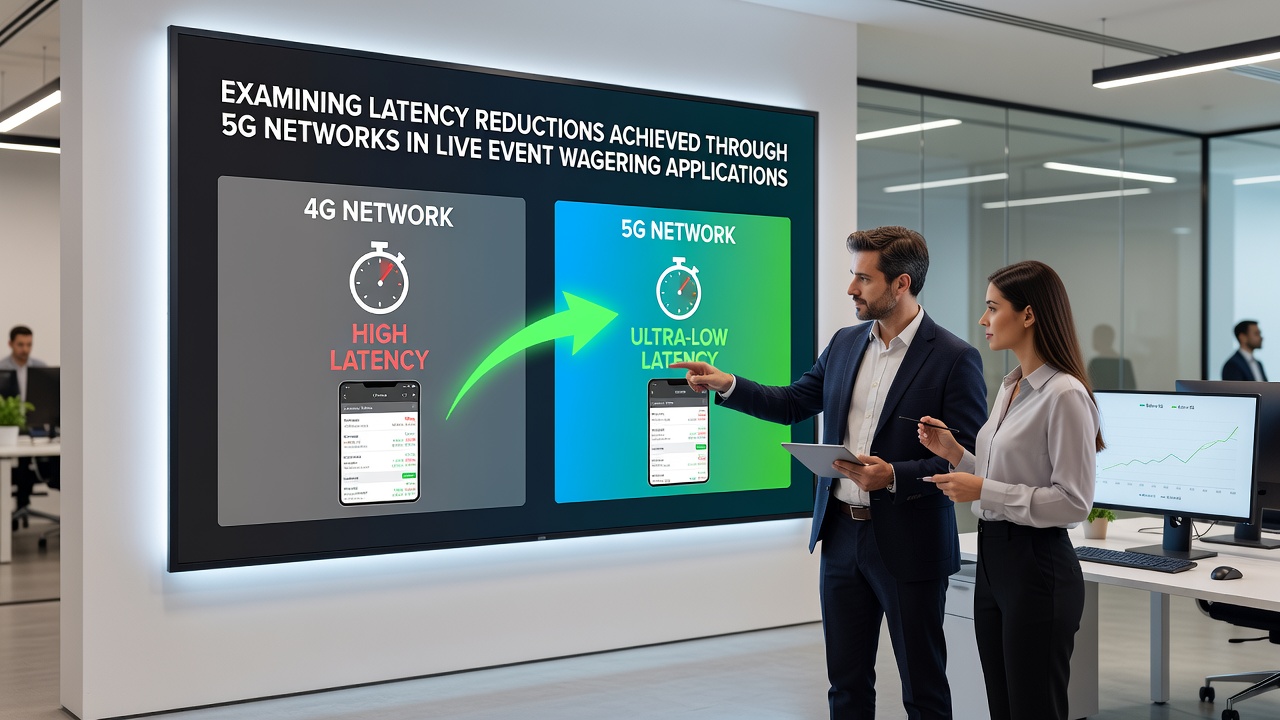
Network operators have deployed 5G infrastructure across major venues since 2023, and data from those rollouts shows average latency dropping from 30-50 milliseconds on 4G to under 10 milliseconds in controlled tests at stadiums and arenas. Live event wagering applications rely on these reductions because bet placement, odds updates, and settlement all depend on synchronized data feeds that must reach users within tight windows during ongoing competitions. Observers note that when transmission delays shrink, platforms can process in-play wagers without the buffer periods that previously forced operators to suspend markets moments before critical plays.
Technical Mechanisms Behind the Reductions
5G achieves lower latency through wider channel bandwidths, edge computing nodes placed closer to event sites, and network slicing that prioritizes wagering traffic over general consumer data. Researchers at multiple institutions have measured round-trip times in field trials where edge servers handle authentication and risk checks locally instead of routing every request to central data centers hundreds of miles away. Those configurations cut the time between a user submitting a bet and receiving confirmation from roughly 80 milliseconds down to 12-15 milliseconds in documented cases. The same studies recorded similar improvements when multiple users placed simultaneous wagers during peak moments such as overtime periods or final laps in motorsport events.
Comparison With Prior Network Generations
Operators who maintained parallel 4G and 5G test environments reported that 4G connections still experienced jitter spikes above 40 milliseconds during high-attendance events, whereas 5G links stayed below 8 milliseconds even when thousands of devices connected simultaneously. Data collected in November 2026 from several North American venues confirmed these patterns held across different frequency bands, including both mid-band and millimeter-wave deployments. The consistency matters for wagering systems because sudden spikes can trigger automatic market pauses to prevent mismatched odds from reaching users.
Applications in Live Event Wagering
Platforms that integrated 5G-compatible APIs have adjusted their order-matching engines to operate on shorter cycles, allowing new bets to enter the book within 50 milliseconds of submission rather than the 200-millisecond windows common on older networks. One documented implementation at a European soccer stadium processed over 120,000 in-play wagers during a single match without extending settlement times beyond the 20-millisecond threshold operators set as their internal target. Similar results appeared in Australian racing events where satellite and terrestrial 5G feeds combined to deliver position data to bet engines with reduced variance compared with previous seasons.
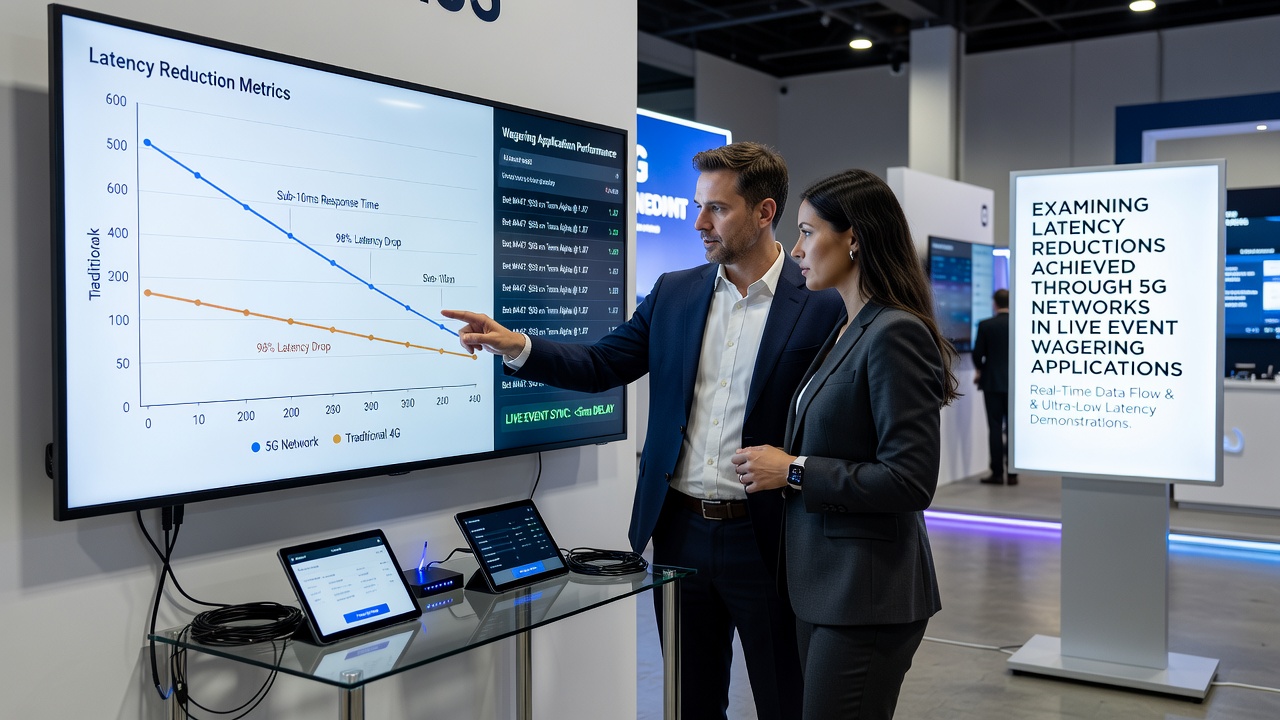
Those who've studied the deployments point out that the improvements also extend to multi-leg bets and cash-out features, which require repeated queries to central risk engines. When each query completes faster, the overall user session experiences fewer interruptions even as market volatility increases near the end of events. Regulatory filings from several jurisdictions show that operators began reporting these metrics in 2025 after initial 5G coverage reached 70 percent of major venues, with further gains tracked through the following year.
Supporting Data From Industry and Research Sources
Figures released by the Federal Communications Commission in mid-2026 indicated that 5G small-cell density at large venues had increased 40 percent year-over-year, correlating with measured latency reductions in commercial networks. Separate analysis from the Australian Communications and Media Authority tracked similar outcomes at outdoor venues where fixed wireless access supplemented mobile 5G, producing average improvements of 25 milliseconds across tested wagering applications. Academic papers examining edge-computing integration have replicated these results in controlled environments, confirming that the physical proximity of processing nodes accounts for most of the observed gains rather than spectrum allocation alone.
Industry organizations such as the European Gaming and Betting Association have compiled operator-submitted statistics showing that platforms using 5G backbones reported fewer instances of bet rejection due to timing thresholds during live events. The pattern holds across different sports and regions, suggesting the technology's impact scales with network maturity rather than remaining limited to flagship deployments.
Operational Adjustments by Operators
Operators have revised their system architectures to take advantage of the lower baseline latency, including tighter synchronization between front-end applications and backend risk models. Some have introduced predictive caching at the edge so that likely next actions load before users initiate them, further trimming perceived response times. These changes appear in platform updates rolled out during 2026, with monitoring dashboards now tracking end-to-end latency as a standard performance indicator rather than an occasional diagnostic metric.
Conclusion
Measurements collected through 2026 demonstrate that 5G networks have reduced latency in live event wagering applications from tens of milliseconds to single-digit figures in multiple operational settings. The reductions stem from edge processing, dedicated network resources, and denser infrastructure at venues, all of which operators have incorporated into updated systems. Data from regulatory bodies and research groups continue to track these metrics as coverage expands, providing ongoing visibility into how network performance influences wagering platform behavior during live events.